

The earliest years of a child’s life represent the most extraordinary period of brain development in the entire human lifespan — a window of neurological growth so rapid, so consequential, and so directly responsive to the quality and variety of stimulation it receives that the toys and experiences provided during this critical period have a genuine and lasting influence on the cognitive, emotional, social, and physical capabilities that the developing child will carry into every subsequent stage of their life. The gift of a developmentally appropriate toy for a baby is therefore far more than a conventional present — it is an investment in the neural architecture whose construction during the first three years determines more about a child’s long-term capability and wellbeing than any intervention available at any later stage of development. Understanding which toys genuinely support brain development — rather than simply entertaining babies without developmental benefit — and how to match specific toys to the specific developmental stage of the individual baby being gifted requires the knowledge that this guide is specifically designed to provide. From the high-contrast visual stimulation toys whose importance in the first weeks of life reflects the newborn brain’s particular sensitivity to visual input, through the sensory exploration toys of the middle infant months, the cause-and-effect discoveries of the later infant period, and the language and symbolic play toys whose developmental value grows through the toddler year, the landscape of genuinely brain-building baby toy gifts is rich, varied, and considerably more specific in its developmental targeting than the generic baby gift section of any department store quite suggests.
Newborn to Three Months: High-Contrast Visual and Auditory Stimulation
The newborn brain is specifically adapted to attend to and process the high-contrast visual information that the faces and environments of the early postnatal period most abundantly provide — and the toy gifts whose design reflects this specific developmental reality by presenting the strong black and white patterns, the simple bold shapes, and the clearly defined edges whose visual properties most directly engage the immature visual system of the very young infant provide the most developmentally appropriate stimulation available for this earliest stage of postnatal life. Understanding why high-contrast visual stimulation is so specifically important in the first weeks and months of life — and how the toys designed around this principle contribute to the development of the visual pathways, the attentional systems, and the early pattern recognition capabilities that underpin later cognitive development — helps parents and gift-givers select toys whose developmental value is real and specific rather than merely assumed from the general category of educational baby toy.
The newborn visual system at birth is neither fully developed nor fully functional in the way that adult vision is — the visual cortex is still in the process of the rapid neural development that will eventually produce adult-level visual acuity, and in the earliest weeks the infant eye is most effectively stimulated by the high-contrast, high-spatial-frequency information that strong black and white patterns provide most effectively. Black and white contrast cards, high-contrast fabric books, and the patterned hanging mobiles whose slowly rotating faces present the rotating sequence of high-contrast images that newborn visual attention finds most engaging are the toy gifts whose design most specifically addresses this developmental need and whose use during the supervised tummy time and awake floor time sessions that support motor and sensory development simultaneously provides the visual stimulation whose quality in these early weeks contributes to the visual pathway development that lays the foundation for all subsequent visual cognitive processing. The gift of a professionally designed high-contrast visual stimulation set — available from several specialist developmental toy manufacturers including Wimmer-Ferguson, Infantino, and the various high-quality baby sensory brands whose developmental research foundation gives their products genuine educational credibility — is among the most specifically appropriate and most developmentally targeted gifts available for a newborn baby whose brain is most receptive to precisely this type of carefully designed visual input.
Auditory stimulation in the newborn period — through the gentle, musically appropriate sounds of quality baby rattles, the soft musical toys whose melody provides the early auditory pattern experience that research associates with subsequent language and mathematical capability development, and the specific human voice quality of the interactive sound toys whose responsive design encourages the proto-conversational vocalisation that represents the earliest stage of language development — provides the complementary sensory dimension whose combination with visual stimulation creates the multi-sensory developmental experience that the most developmentally sophisticated newborn toys are specifically designed to deliver. Soft fabric rattles whose combination of tactile texture, visual contrast, and gentle sound provides three simultaneous sensory inputs in a single safe and age-appropriate toy format represent the most accessible and most versatile gift option for newborn sensory stimulation, while the quality musical mobiles whose combination of visual tracking opportunity, auditory stimulation, and the overhead spatial exploration that promotes early depth perception development creates the most complete single sensory stimulation environment available in any toy format designed specifically for newborn developmental needs.
Three to Six Months: Reaching, Grasping, and Discovering Cause and Effect
The period between three and six months of age is one of the most dramatic developmental transformations available in human development — the transition from the relatively passive sensory reception of the newborn period into the active, exploratory, increasingly intentional reaching and grasping behaviour that marks the emergence of the voluntary motor control whose development across this period fundamentally changes the baby’s relationship with the physical world around them. The toys most developmentally appropriate for this stage are those whose design specifically invites and rewards the reaching, grasping, mouthing, and early manipulative exploration that the developing fine and gross motor systems are simultaneously practising and refining, while providing the specific sensory feedback — the sounds, the textures, the visual responses — that confirms the effect of the baby’s intentional actions and builds the foundational understanding of cause and effect whose development during this period represents one of the most important cognitive achievements of early infancy.
Activity gyms and play mats — whose overhead hanging toys invite the visually guided reaching that develops hand-eye coordination, whose ground-level textured surfaces provide the tactile exploration that sensory processing development requires, and whose mirror elements support the early social cognition of self-recognition that typically begins to emerge toward the end of this developmental period — are among the most comprehensively developmental and most practically versatile gift toys available for the three-to-six-month age range. The best activity gyms provide not merely the physical infrastructure of hanging toys and varied floor textures but the specifically calibrated developmental challenge of toys whose height, weight, and responsiveness to gentle contact are matched to the specific motor capabilities of the target developmental stage — close enough to reach with effort but not so distant as to create frustration, light enough to be moved by an emerging grasp but with enough resistance to provide the proprioceptive feedback that builds the motor memory of successful object manipulation. Soft rubber teething toys whose textured surfaces provide the sensory oral exploration that this period’s mouthing behaviour specifically seeks — combined with the visual interest of bright colours and the gentle rattling sounds of internal beads whose combination makes them multi-sensory developmental tools rather than simply soothing implements — are further excellent gift options for the three-to-six-month developmental stage whose oral exploratory drive is as genuine a developmental behaviour as any of the more visually obvious reaching and grasping activities that this period is most celebrated for producing.
Six to Twelve Months: Exploration, Object Permanence, and Early Language
The second half of the first year of life is the developmental period during which the baby transforms most visibly and most dramatically from the primarily reactive, sensory-receiving infant of the earlier months into the increasingly active, intentional, socially engaged, and cognitively sophisticated pre-toddler whose capabilities by the end of the first year — sitting independently, beginning to stand and cruise, reaching for and manipulating objects with genuine intentionality, babbling with increasing complexity and conversational intention, and demonstrating the object permanence whose development signals one of the most significant cognitive milestones of early childhood — bear almost no resemblance to the capabilities of the newborn they were less than twelve months previously. The toys most developmentally valuable as gifts for this age range are those whose design specifically engages the rapidly developing cognitive, motor, social, and linguistic capabilities of this transformative period with the appropriate challenge level that supports continued development without creating the frustration of demands that exceed current capability.
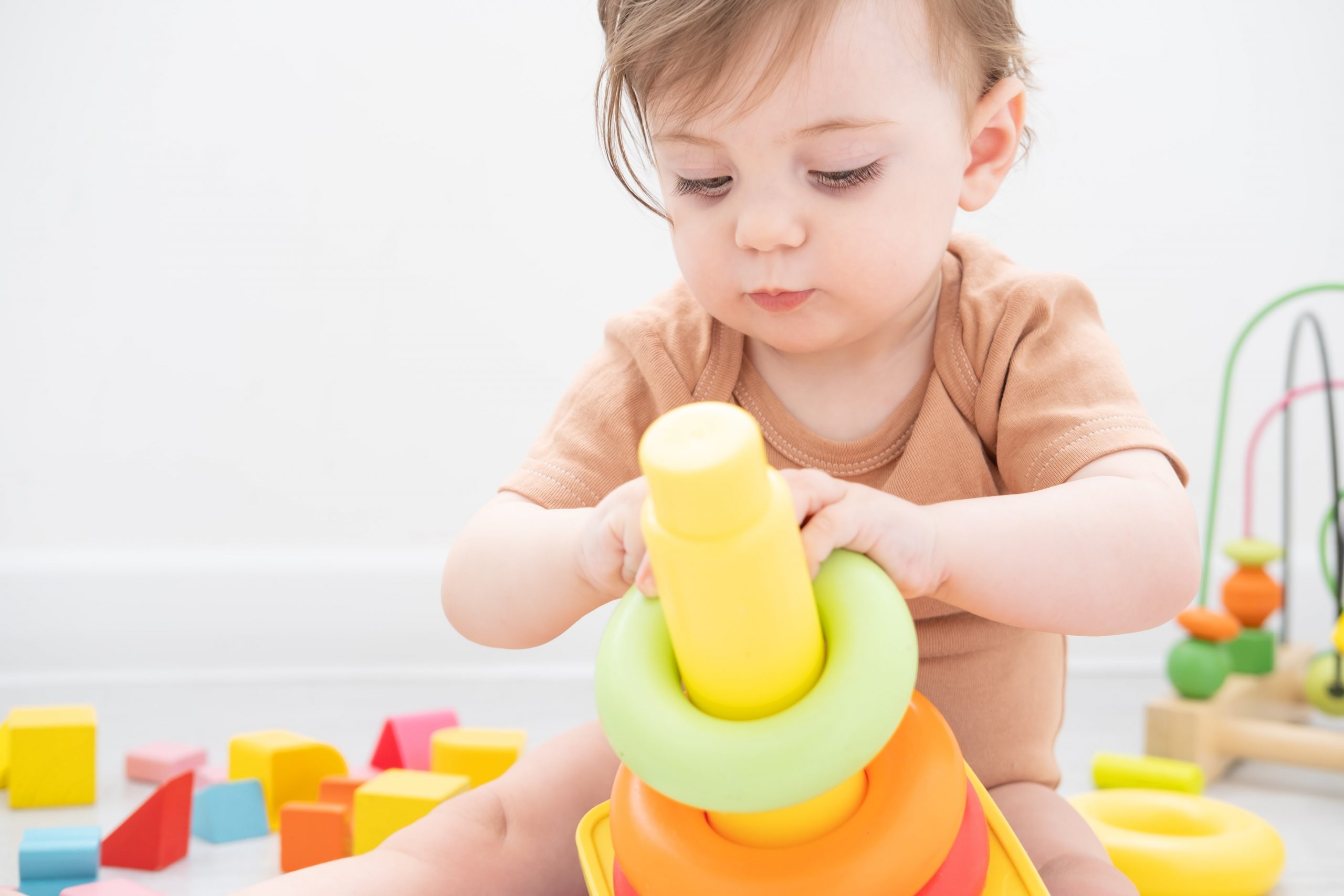
Object permanence boxes — the simple toy containers whose design involves placing an object through an opening and finding it again in the accessible interior, practising the understanding that objects continue to exist when they cannot be seen whose development through this period Piaget identified as one of the fundamental achievements of the sensorimotor developmental stage — are among the most specifically cognitively targeted developmental toys available for the six-to-twelve-month age range and ones whose play value at exactly this developmental stage is both high and specific in a way that makes them one of the most genuinely educational gift choices available. The simple pull-back car or ball that disappears and reappears, the jack-in-the-box whose hidden figure emerges with the turning of the handle, and the covered container whose contents remain present despite being temporarily hidden all provide variations on the object permanence exploration theme whose cognitive importance in this developmental window is as well-established as any finding in developmental psychology. Stacking rings, nesting cups, and simple shape sorters whose design challenges the emerging spatial reasoning and the developing fine motor manipulation of the older infant provide the next layer of cognitive complexity whose appropriate introduction in the later months of this period bridges the transition from the pure object exploration of the earlier infant months to the more intentional, problem-solving-oriented play whose emergence in the second half of the first year anticipates the more sophisticated cognitive engagement of the toddler period.
Language development toys — the simple board books whose sturdy construction and clearly illustrated content support the shared book reading whose developmental value in building vocabulary, narrative understanding, and the love of books and reading is as well-established as any finding in early childhood development research, the cause-and-effect sound toys whose responsive design to simple button pressing or lever pulling produces the specific language sounds, animal names, and simple words whose repeated exposure builds the vocabulary foundation that subsequent language development builds upon, and the musical instruments whose rhythm, melody, and the specific physical act of producing sound support the auditory processing development whose contribution to later language and mathematical capability has been extensively documented — represent the language and auditory developmental dimension of gift toys for the six-to-twelve-month age range whose importance should be given equal weight alongside the motor and cognitive developmental toys that often receive more attention in gift selection for this age group.
Twelve to Twenty-Four Months: Symbolic Play, Physical Exploration, and Social Learning
The second year of life is the developmental period whose pace of change — in language, in motor capability, in social understanding, in the symbolic and pretend play whose emergence signals the development of the representational thought that underlies language, imagination, and the capacity for abstract reasoning — rivals the first year in its transformative velocity and whose specific developmental characteristics create the most diverse range of genuinely developmental toy gift opportunities available at any stage of infant development. The toddler’s developing ability to use objects symbolically — to treat a wooden block as a car, a banana as a telephone, or a doll as a baby requiring care — represents a quantum leap in cognitive sophistication whose support through appropriately designed pretend play toys is one of the most developmentally targeted gift investments available for this age range.
Simple pretend play sets — the basic kitchen play sets whose pots, pans, and food items invite the domestic scene re-enactment that is among the earliest and most universal forms of symbolic play, the doll and soft toy sets whose caring and nurturing play provides the social role-taking practice that develops the theory of mind whose later sophistication underlies mature social cognition, and the simple vehicle and construction sets whose open-ended play value allows both the physical manipulation that develops fine motor skills and the imaginative narrative construction that supports early language and story-making capability — are the gift toys whose developmental value for twelve-to-twenty-four-month toddlers most directly supports the symbolic and social cognitive development whose emergence during this period represents the most significant cognitive advance available in early childhood. Push and ride-on toys whose design supports the balance, the coordination, and the physical confidence of the early walking and running toddler while providing the motivation of purposeful movement toward a destination provide the gross motor developmental support that is as important in the second year as the fine motor and cognitive stimulation that smaller toys provide, and whose combination in a well-selected gift set reflects the understanding that comprehensive developmental support addresses the whole child’s growth across all developmental domains simultaneously.
Duplo building blocks and their developmental equivalents — the large, easy-to-manipulate connecting block systems whose simple joining and separating mechanics are accessible to toddler fine motor capability while providing the genuine spatial reasoning, the construction planning, and the creative expression that make building toys among the most enduringly developmentally valuable gift categories available across the full range of early childhood from the simplest first block towers of late infancy through the elaborate constructional projects of middle childhood — represent one of the most reliably excellent gift toy investments available for any toddler whose developmental needs across cognitive, fine motor, creative, and spatial reasoning dimensions can all be significantly supported by the sustained, open-ended, child-directed engagement that quality building toys consistently and generously reward. The gifts and care invested in selecting the genuinely developmental toys described throughout this guide — chosen with the understanding that the best baby gift toys are those whose design reflects genuine developmental knowledge rather than merely entertaining appearance — are among the most personally meaningful and most lastingly impactful presents that any person can bring to a baby or young child whose developmental journey is the most extraordinary thing they will ever undertake and the most precious thing they have ever been given the time and the stimulation to pursue.
Choosing Safely and Wisely: Quality, Materials, and Age-Appropriate Standards
The developmental value of any baby toy gift is entirely contingent on the safety of the toy itself — a fact whose importance is so fundamental that it must be addressed with complete clarity before any consideration of developmental benefit, aesthetic appeal, or brand reputation influences any gift selection decision. The safety standards applicable to toys sold for infants and young children in the United Kingdom — governed by the Toys Safety Regulations 2011 whose requirements for physical and mechanical safety, chemical safety, and the absence of choking hazards whose presence in toys marketed for children under three is categorically prohibited — provide the regulatory minimum whose satisfaction any responsible toy purchaser must verify before any other purchasing consideration is applied.
The choking hazard is the most critical safety consideration for any toy intended for use by babies and toddlers — whose primary exploratory tool remains the mouth throughout the first two to three years of life and whose indiscriminate application of oral exploration to any object within their reach makes the size, the detachability, and the structural integrity of every component of any toy a genuine safety matter whose assessment must precede any evaluation of developmental merit. The generally cited guideline — that any object small enough to pass through a toilet paper roll tube presents a potential choking risk for a child under three — provides a practical initial screening test whose application to any toy before its purchase identifies the most immediate safety concerns that formal age-appropriate labelling, while necessary, does not always fully capture. The material quality of baby toys — the non-toxicity of paints, dyes, and finishes whose oral contact is inevitable during the mouthing exploration of infancy, the durability of construction whose ability to withstand the enthusiastic handling of the target age group without breaking into sharp or small fragments is a safety requirement as important as any material chemistry consideration, and the absence of cords, strings, or long flexible components whose strangulation or entanglement risk makes them categorically inappropriate for any toy intended for unsupervised infant use — are the further safety assessment dimensions whose consistent evaluation before any baby toy gift purchase is the most important single expression of the care and responsibility that gift-giving for the very young most fundamentally requires.
Conclusion
The selection of genuinely developmental baby toy gifts — chosen with the knowledge of what specific developmental stages require, matched carefully to the individual baby’s current developmental position, assessed rigorously for the safety standards that make any developmental benefit possible, and presented with the warmth and the care that the giving of a thoughtful gift to a remarkable small person at the most extraordinary moment of their development deserves — is one of the most personally meaningful and most developmentally consequential gift-giving activities available in the entire landscape of human giving occasions. The high-contrast visual toys that engage the newborn brain at its moment of most rapid visual pathway development, the reach-and-grasp toys that support the motor and cause-and-effect discoveries of the middle infant period, the object permanence and language toys that target the cognitive revolution of the second half of the first year, and the pretend play and construction toys that support the symbolic cognitive flowering of the toddler year together constitute a developmental gift curriculum whose consistent provision to a growing baby across the first two years of life represents one of the most genuinely impactful and most genuinely caring investments in a young child’s development that any adult fortunate enough to be part of that child’s life can make. The gifts and care that surround a growing baby with the specific developmental stimulation that each stage of their extraordinary neurological journey most needs are gifts whose value extends far beyond the moment of giving — accumulating in the neural connections, the cognitive capabilities, and the emotional foundations that the first two years of life are building with a speed and a consequence that no subsequent developmental investment quite matches in its fundamental and enduring importance.