

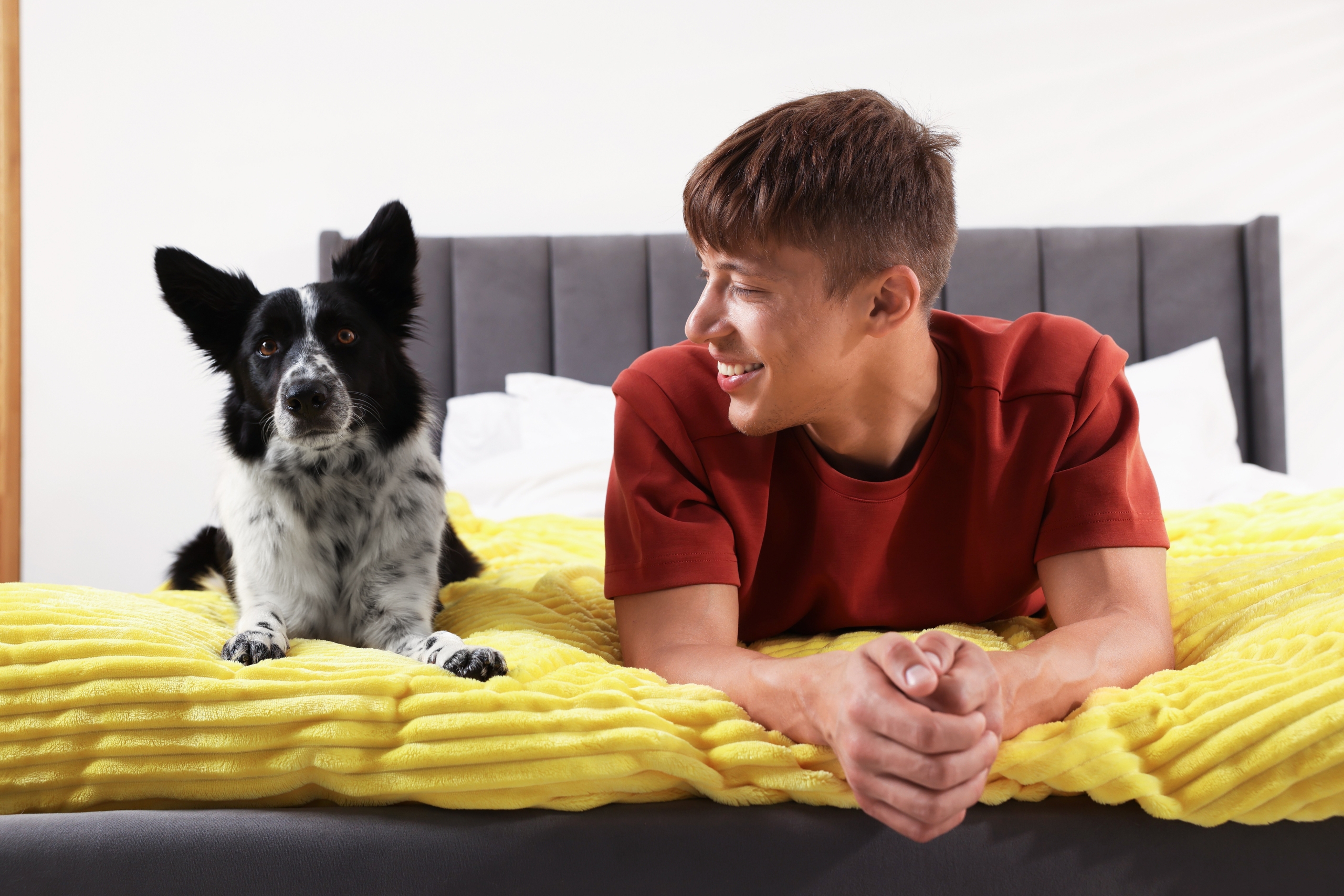
The question of how to design a bedroom that serves both the human occupant’s need for a beautiful, restful, and personally expressive sleeping space and the pet’s need for comfort, safety, and the close proximity to their person that most dogs and cats emphatically prefer when given any choice in the matter is one of the most practically relevant interior design challenges facing the significant proportion of the population whose pets sleep in, regularly visit, or simply cannot be persuaded to stay out of the bedroom regardless of how many comfortable alternative sleeping locations have been provided. The statistics on pet sleeping arrangements are consistently striking — surveys suggest that approximately half of all dog owners and a significant proportion of cat owners share their bedroom with their pet either on the bed or in the room, and the figure rises considerably when pets are included in the survey rather than just owners — and the design implications of this reality are both practical and aesthetic in ways that the generic bedroom design guidance, whose implicit assumption of a pet-free sleeping environment produces recommendations that work beautifully in showrooms and rather less beautifully in the daily reality of a home whose animal companions have strong opinions about furniture access, sleeping positions, and the general distribution of fur across all available surfaces. This guide addresses the pet-friendly bedroom design challenge with the specific, practical, and aesthetically serious attention it deserves — covering the material choices whose durability and cleanability make them genuinely appropriate for pet-occupied spaces, the furniture and storage strategies that create the pet-integrated bedroom whose design acknowledges rather than ignores the animal’s presence, the specific pet amenity features whose thoughtful incorporation creates a bedroom that genuinely serves the needs of every occupant, and the aesthetic approaches that allow the pet-friendly bedroom to be as beautiful and as personally expressive as any room whose occupants happen not to shed, claw, or occasionally chew the furnishings.
Choosing Pet-Proof Materials: Flooring, Fabrics, and Surfaces That Survive Real Life
The most practically consequential design decisions in any pet-friendly bedroom are the material selections whose durability, cleanability, and resistance to the specific forms of wear that pets create — the claw marks on wood and leather, the fur on upholstery, the muddy paw prints on flooring, and the occasional accident whose cleaning requirements make some materials genuinely unsuitable for pet-occupied spaces regardless of their aesthetic appeal — determine whether the bedroom’s design holds up to the daily reality of pet cohabitation or requires the constant management of visible damage whose accumulation progressively undermines the quality of the design investment. The good news for the aesthetically conscious pet owner is that the range of genuinely pet-appropriate materials available in 2025 is considerably broader, considerably more attractive, and considerably more design-forward than the purely functional, pet-specific products that previously represented the primary alternative to the constant frustration of beautiful materials destroyed by beloved animals.
Flooring is the most impacted surface in any pet-occupied bedroom and the material choice whose importance to both the practical function and the aesthetic quality of the space is most directly and most continuously felt. Luxury vinyl tile and luxury vinyl plank flooring — whose hard-wearing, waterproof surface combines genuine wood or stone visual character with the scratch resistance, the ease of cleaning, and the comfortable underfoot feel that make them consistently the most recommended flooring solution for pet-friendly spaces — have evolved dramatically in visual quality from the plastic-looking sheet vinyl of earlier generations to the sophisticated, deeply textured formats whose visual character is genuinely indistinguishable from natural wood or stone in all but the most intense scrutiny. The specific luxury vinyl specification most appropriate for a pet-occupied bedroom includes a thick wear layer of at least twelve mil whose resistance to the scratch marks that dog claws create on softer surfaces provides the practical protection that any flooring in a regularly dog-occupied space genuinely requires, a waterproof core whose complete moisture barrier protects the subfloor from the occasional accident whose penetration into a non-waterproof floor creates the odour and the subfloor damage that thorough surface cleaning alone cannot address. Hardwood flooring — whose natural material beauty and whose warmth underfoot make it one of the most consistently desirable bedroom flooring options — can be used in pet-occupied bedrooms when the specific wood species is sufficiently hard to resist claw marking, when the finish is a genuinely tough oil-based or conversion-varnish product rather than the more delicate water-based finishes that scratch more easily, and when the aesthetic acceptance of the natural character marks that pet use inevitably creates aligns with the distressed or characterful aesthetic that many hardwood flooring styles embrace rather than conflict with.
Upholstery fabrics for any seating, bed frame, headboard, or soft furnishing element in a pet-friendly bedroom should be selected with the specific durability, cleanability, and hair-release properties that pet-occupied upholstered surfaces require — properties whose combination in a genuinely attractive fabric creates the most challenging specification challenge in pet-friendly interior design and the area where the gap between the aesthetically ideal and the practically appropriate is widest. Performance fabrics — including the various solution-dyed acrylic, microfibre, and performance polyester weaves whose specific technical properties of stain resistance, moisture resistance, and ease of cleaning make them genuinely more appropriate for pet contact than the natural fibres that provide the most beautiful tactile and visual qualities — have improved sufficiently in their aesthetic character that many contemporary performance fabric ranges are visually indistinguishable from the natural wovens they technically outperform in every practical pet-related dimension. The specific fabric properties most important for pet-occupied upholstery are the tight weave whose resistance to claw snagging prevents the pulled thread damage that loosely woven fabrics suffer immediately in cat contact, the smooth or short-pile surface whose hair release in cleaning is dramatically more complete than the longer, looser pile whose fibres trap fur with a tenacity that makes complete cleaning practically impossible, and the colour and pattern selection whose choice of medium tones or deliberately pet-fur-matched colours creates the most visually forgiving canvas for the inevitable fur distribution that no amount of daily grooming entirely prevents.
Creating a Dedicated Pet Sleeping Area: Beds, Crates, and Integrated Pet Spaces
The creation of a dedicated, comfortable, and aesthetically considered sleeping area for the pet within the bedroom — whether the goal is to provide an alternative to the human bed that is genuinely more appealing to the animal than the floor, to integrate the pet’s sleeping space into the room’s design in a way that acknowledges and celebrates their presence rather than treating it as an embarrassing practicality to be concealed, or to create the specific spatial arrangement that allows the pet’s proximity without the specific sleep disruption that full bed-sharing produces — is both a practical animal welfare investment and an interior design opportunity whose thoughtful execution produces some of the most charming and most personalised bedroom spaces available in any pet-owning household.
The built-in pet bed or nook — the architectural integration of a dedicated pet sleeping space into the bedroom’s structural design through the creation of a recessed shelf at floor level beneath a window seat, a fitted space within a built-in wardrobe unit whose lower section is designed as a dog den, or the purpose-built alcove in a bedroom wall whose proportions perfectly fit the animal’s preferred sleeping position — is the most design-sophisticated and most spatially efficient pet sleeping integration available and the solution that most completely achieves the aesthetic seamlessness of a pet space that reads as a designed feature of the room rather than an afterthought added to accommodate the animal. The built-in dog bed whose cushioned sleeping surface is at floor level beneath the window, providing the dual benefit of the territorial security that enclosed spaces provide for dogs and the natural light and garden view that makes window-adjacent positions the most chosen by animals whose preferences are observed rather than ignored, is one of the most frequently featured and most widely admired pet bedroom design solutions and the one whose replication in any bedroom with suitable structural opportunities requires nothing more than the built-in joinery skill and the thoughtful cushion selection that any competent carpenter and any attentive pet owner can provide together.
Freestanding pet beds whose design quality and aesthetic character have improved dramatically in the premium pet accessories market — from the beautifully crafted rattan and canvas designs of specialist pet furniture makers, through the architectural concrete and steel minimal pieces that serve the design-conscious pet owner whose aesthetic sensibility extends to their animal’s sleeping furniture, to the upholstered pet sofas and chaises whose scaled-down versions of human furniture pieces create the specific visual continuity between the pet’s space and the human’s that makes the most charming pet bedroom interiors — now provide the pet-owning interior design enthusiast with genuinely beautiful options that serve both the animal’s comfort requirements and the bedroom’s aesthetic aspirations without the compromise of choosing between them. The specific positioning of the pet’s sleeping space relative to the human bed — close enough for the proximity that most dogs and many cats specifically seek as the primary value of bedroom access, but positioned to minimise the sleep disruption that direct bed-sharing causes through the animal’s movement, heat, and nocturnal activity — is the practical arrangement whose specific solution varies between animals and their owners but whose thoughtful consideration produces the most sustainably comfortable sleeping arrangement for both parties.
Managing Fur, Odour, and Allergens: Practical Solutions for a Fresh Bedroom
The practical management of the fur, the dander, the odour, and the allergen load that any pet-occupied bedroom inevitably accumulates is as important to the comfort and the health of the human occupants as any aesthetic or design consideration — and the specific systems, habits, and product selections whose consistent application keeps a pet-occupied bedroom genuinely fresh, genuinely clean, and genuinely comfortable for both its human and its animal inhabitants represent the operational infrastructure whose quality most directly determines whether the shared bedroom arrangement remains a pleasure or becomes a persistent low-level domestic irritant.
Air purification is the single most impactful environmental management investment available in any pet-occupied bedroom — a HEPA-filter air purifier whose continuous operation captures the airborne pet dander, the fur particles, and the odour molecules whose concentration in the enclosed bedroom environment creates the specific air quality challenges that pet occupancy inevitably generates. The air purifier specification most appropriate for pet-occupied bedrooms includes a genuine HEPA filter whose certification confirms the removal of ninety-nine point nine seven percent of airborne particles down to zero point three microns — the particle size range that encompasses the smallest pet dander particles whose size allows them to remain airborne for extended periods and whose inhalation creates the allergic response that affects a significant proportion of the population regardless of their love for their specific pet. The activated carbon filter element that captures odour molecules rather than merely filtering particles is the complementary component whose importance alongside the HEPA filter is specific to pet-occupied spaces whose primary air quality challenge is as much olfactory as particulate — a combination filter specification that the most effective pet-specific air purifiers incorporate as standard in the premium models whose continuous operation on low speed creates a genuinely fresher and genuinely cleaner bedroom air environment than any other single household product investment provides with equivalent consistency and equivalent measurability.
Bedding selection and washing frequency in a pet-occupied bedroom requires the specific calibration of materials and protocols that the higher soiling rate of pet contact creates — the more frequent washing schedule whose additional laundry burden is the most honest practical acknowledgement of the tradeoff that pet bed-sharing involves, the specific bedding materials whose construction is most resistant to fur penetration and most efficient in releasing accumulated fur in the washing machine cycle, and the specific duvet and pillow protection whose encasing of the most expensive and hardest to clean sleep textiles behind the washable covers that accept and release pet fur more completely creates the most practical layered protection system available. Tightly woven cotton percale bedding — whose smooth, tight weave surface releases fur most completely in both daily removal and washing — is the specific material specification most consistently recommended for pet-occupied beds, whose superior hair release compared to the loose weave of linen and the clinging pile of jersey knit makes it the practical choice for the bedroom where aesthetic preference and laundering efficiency are most productively served by the same material selection.
Furniture Layout and Pet Safety: Design That Protects Your Pet and Your Home
The furniture layout and the specific design choices that create physical safety for the pet in the bedroom — preventing the access to spaces where entrapment is possible, eliminating the toxic plant species whose decorative appeal creates genuine poisoning risk for the curious cat or dog who investigates everything at nose level, securing the electrical cables whose chewing by young or bored animals creates both animal injury risk and appliance damage, and creating the specific traffic flow and furniture arrangement that allows comfortable pet movement without the obstacle course of furniture legs and cable runs that the typical bedroom layout creates for the low-to-ground animal whose navigation of the space involves a very different physical relationship with the furniture than the upright human experiences — is the safety-focused design dimension whose thoughtful implementation prevents the specific accidents and the specific health risks that an unsafety-conscious bedroom design creates for the animal occupant whose welfare the shared bedroom arrangement is intended to enhance rather than compromise.
The specific pet safety considerations most commonly overlooked in bedroom design include the gap beneath freestanding furniture whose dimensions allow a cat or small dog to enter but whose subsequent inability to exit creates the entrapment situations whose resolution can require furniture removal under distressing circumstances for both animal and owner. Blocking these gaps with the furniture skirt, the solid plinth base, or the simple physical barrier whose installation under low-clearance furniture eliminates the access that creates the entrapment risk is the most directly preventive available intervention — simpler, less expensive, and more immediately effective than any reactive response to the entrapment incident whose prevention it is specifically designed to achieve. The electrical cable management that conceals all cables within the wall-mounted cable channels, the cable sleeves, or the furniture arrangements that physically separate cables from the pet’s reach eliminates the chewing risk that exposed cables create for teething puppies, bored young dogs, and the occasional cat whose relationship with electrical cables is inexplicably and consistently antagonistic regardless of any discouragement.
The home and garden bedroom that has been genuinely designed with its pet occupants as equal stakeholders in the design process — whose material choices reflect the practical reality of daily pet contact without sacrificing the aesthetic quality that makes the room a genuinely beautiful human environment, whose dedicated pet sleeping space acknowledges and celebrates the animal’s presence with the dignity and the thoughtfulness that a valued family member deserves, whose air quality management systems create the fresh, healthy atmosphere that both human and animal benefit from, and whose safety-conscious furniture layout and cable management protect the animal from the specific hazards that the domestic bedroom environment creates for the curious, low-to-ground, occasionally electrically attracted animal — is the bedroom that most completely and most honestly serves the needs of everyone who shares it, and whose design quality reflects the genuine integration of the pet into the household’s life rather than the grudging accommodation of their presence in a space that was never really designed with them in mind.
Aesthetic Inspiration: Making the Pet-Friendly Bedroom Genuinely Beautiful
The pet-friendly bedroom whose design has successfully addressed all of the practical, material, and safety considerations described in the preceding sections still has the most personally rewarding design work ahead of it — the aesthetic development that transforms a practically sound space into a genuinely beautiful, genuinely personal, and genuinely expressive bedroom whose character communicates both the human occupant’s taste and the warmth and the joy of the animal relationships that make the shared sleeping arrangement one of the most intimate and most emotionally significant dimensions of pet ownership. The aesthetic opportunities of the pet-friendly bedroom are not diminished by the practical constraints the design must accommodate — they are enriched by the specific human-animal relationship whose expression through thoughtful design choices produces rooms whose character is as distinctively warm, as unmistakably personal, and as genuinely moving as any domestic interior whose personality reflects the full honesty of the life lived within it.
The specific aesthetic directions that work most successfully in pet-friendly bedrooms combine the natural, warm, and tactile material character that both performs well under pet contact and communicates the specific warmth and the organic richness that the best pet-friendly interiors consistently express. The palette of warm neutrals — the natural linen tones, the warm stone and clay colours, the oaked wood warmth — creates the most forgiving background for the inevitable fur contribution to the room’s visual character while providing the specific enveloping quality of warmth that both humans and animals instinctively respond to as the feeling of comfort and safety. The strategic inclusion of pattern — in the rug whose bold geometric or botanical design provides both the visual interest that a neutral bedroom palette needs and the practical camouflage of the pet fur whose colour typically contrasts with plain backgrounds more visibly than with the visual complexity of a patterned surface — is the aesthetic device whose pet-friendly practical benefit is as real as its decorative contribution to the room’s character.
Pet portraiture and pet-themed art — the commissioned portrait of a beloved dog or cat whose presence in the bedroom creates the specific personalisation that generic decorative art cannot provide with equivalent emotional resonance, the ceramic or textile work whose animal motif reflects the household’s specific species rather than the generic animal imagery of mass-produced homeware — creates the specific visual acknowledgement of the pet’s importance to the household that the most personally meaningful bedroom design always includes. The bedroom that includes a beautifully framed portrait of the family dog, a cushion whose print captures the specific colouring of the household cat, or the handmade ceramic dish on the bedside table whose animal theme connects the room’s decoration to the animal whose presence within it is among its most important and most loved occupants communicates with the specific warmth and the specific authenticity of genuinely personal design whose quality no amount of stylistically sophisticated but emotionally neutral decoration can replicate for the person whose love for their animal is as fundamental a part of who they are as any other dimension of the deeply personal self whose expression the bedroom at its most intimate and most honest most beautifully and most completely reflects.
Conclusion
The pet-friendly bedroom is not a compromise between the beautiful bedroom you want and the practical space your pet requires — it is the specific, honest, and deeply personal expression of a domestic life whose beauty includes the animals whose presence enriches it. The material choices whose durability and cleanability make them genuinely appropriate for daily pet contact, the dedicated pet sleeping spaces whose design acknowledges and celebrates the animal’s presence with the thoughtfulness it deserves, the air quality and cleanliness management systems whose consistent operation creates the genuinely fresh and healthy atmosphere that both species benefit from, the safety-conscious design details whose implementation protects the curious and occasionally incautious animal from the specific hazards that bedrooms contain, and the aesthetic vision whose integration of warmth, natural materials, personal art, and the specific character of a household whose animal members are as central to its identity as any human one together produce the bedroom whose quality as a living space reflects the full, honest, and genuinely loving reality of the shared human-animal domestic experience that millions of households live every day with the uncomplicated joy that the best pet-friendly bedrooms most directly and most beautifully express.