

Safety Disclaimer: The information in this article is for general educational and awareness purposes only. In the event of a medical emergency or serious accident in the home, call 999 immediately. For home safety assessments, professional advice from qualified electricians, gas engineers, or fire safety officers is always recommended over self-assessment alone.
The home is the one place in the world that most people instinctively associate with safety, comfort, and protection from the hazards of the outside world — and yet the statistical reality of domestic accident data tells a very different story about the actual safety record of the domestic environment. In the United Kingdom, home accidents account for more than six thousand deaths and over two and a half million hospital admissions annually, making the home statistically one of the most hazardous environments that most people regularly occupy — more dangerous, in injury and fatality terms, than the workplace whose safety culture, regulatory oversight, and explicit risk assessment frameworks have reduced occupational accident rates dramatically while domestic accident rates have remained persistently high. The hazards responsible for this domestic accident toll are not exotic or unusual — they are the ordinary features of the ordinary home whose familiarity has bred the specific inattention and the specific complacency that makes them disproportionately dangerous. Falls on stairs, scalding from hot liquids, cuts from poorly stored knives, poisoning from improperly stored chemicals and medications, fire from unattended cooking, carbon monoxide from poorly maintained gas appliances, drowning in baths and garden ponds, and the crushing injuries of unstable furniture — these are the hazards whose management through the practical awareness and the specific prevention strategies that this guide provides can dramatically reduce the risk of the injuries and the deaths that they annually cause in homes across the country. The home and garden that has been assessed honestly for its safety risks and improved systematically through the practical measures whose implementation addresses the most significant identified hazards is a genuinely safer home for every member of the household — from the youngest children whose developmental characteristics create specific vulnerability to specific hazard types through to the oldest adults whose mobility changes create the falling risks whose prevention is the single most important domestic safety intervention available for the elderly population.
Falls: The Most Common and Most Preventable Domestic Accident
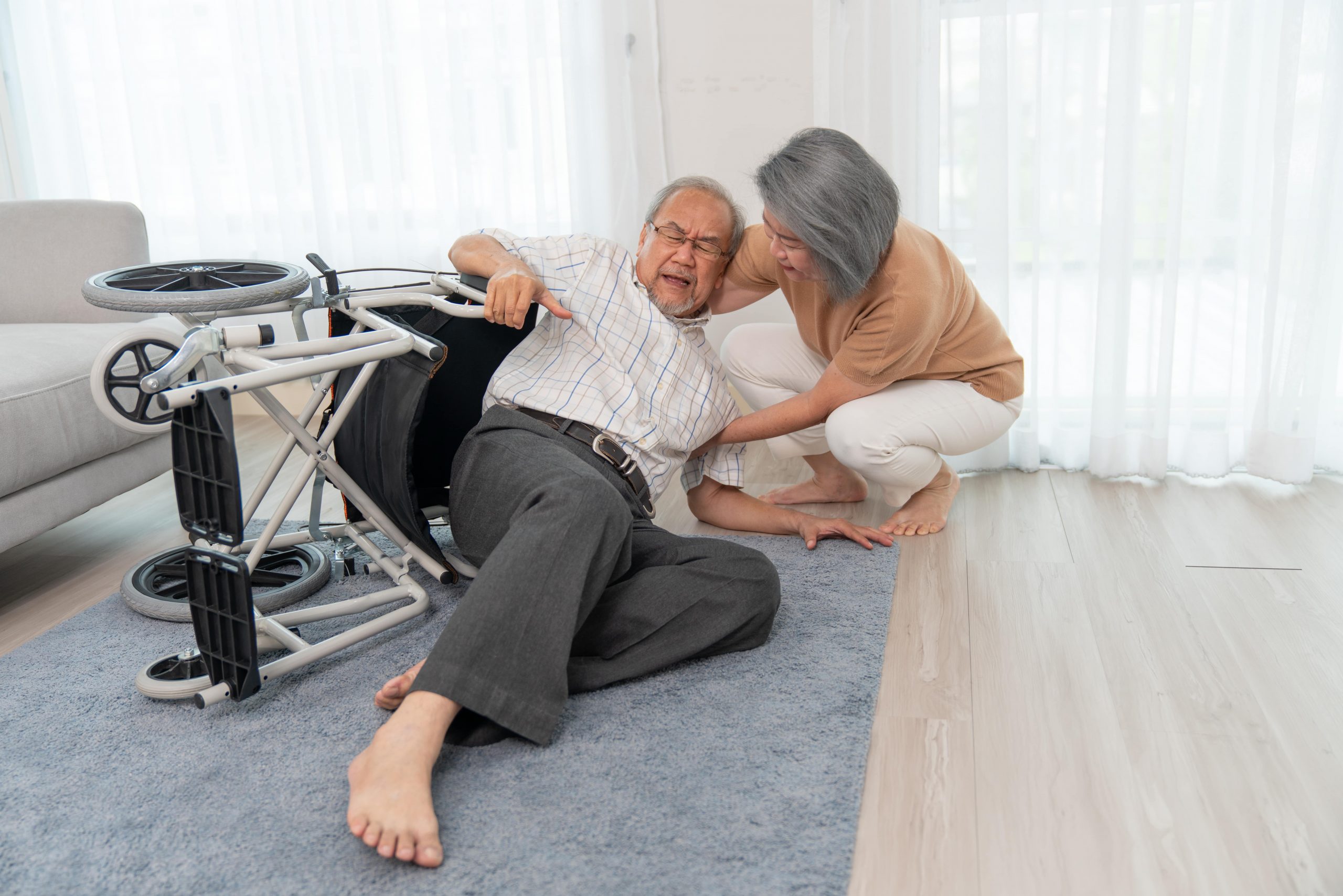
Falls are the most frequent cause of accidental injury and accidental death in the home across all age groups combined, and the single most preventable category of domestic accident whose risk reduction through the systematic identification and removal of the environmental hazards that contribute to falls — combined with the personal risk factor management that exercise, vision care, and medication review provide — represents the most impactful single domestic safety investment available to any household committed to the honest reduction of its accident risk. The specific fall hazards most commonly identified in home safety assessments span every room of the house and every area of the garden, creating a comprehensive hazard landscape whose systematic evaluation provides the foundation for the most targeted and the most effective fall prevention strategy available.
Staircase falls account for a significant proportion of the most severe domestic fall injuries — the combination of height, hard surfaces at the bottom, and the potential for the falling person to tumble multiple steps before coming to rest creating the injury severity that makes stair fall prevention a priority in any household containing young children or older adults whose balance, muscle strength, or medication side effects create elevated falling risk. The specific stair safety measures whose installation and maintenance most directly reduce stair fall risk include the handrail whose continuous, secure presence on at least one side of every staircase provides the balance support that prevents both the stumble and the fall that loss of balance on stairs without support creates, the adequate lighting whose provision ensures that every step is clearly visible at all times of day and night including the middle of the night visits to the bathroom that are among the most common contexts for stair falls in older adults, the secure carpet or non-slip surface treatment whose maintenance prevents the loose, worn, or slippery stair surface that contributes to a significant proportion of domestic stair falls, and the consistent gate installation at both the top and bottom of any staircase to which young children have access whose barrier function prevents the developmental exploration that results in the catastrophic stair falls that send thousands of toddlers to emergency departments annually.
Bathroom falls — whose specific risk factors of wet, slippery surfaces, the physical demands of getting in and out of the bath or shower, and the absence of the stable handholds that the bathroom’s smooth, tiled surfaces rarely naturally provide create a fall hazard of particular severity for older adults and those with mobility limitations — are the domestic fall context for which the most specifically effective prevention investments are available and most clearly indicated. Non-slip bath and shower mats whose textured suction-cup surface maintains its non-slip properties when wet, grab rails professionally installed at the critical points of bathroom entry and exit whose positioning and whose load-bearing capacity meet the standards that genuinely support an adult’s body weight under the stress of preventing a fall, and the walk-in shower or wet room replacement of the over-bath shower arrangement whose step-over height creates the most common bathroom fall mechanism for older adults are the specific bathroom safety investments whose provision makes the most significant and most immediately measurable reduction in domestic bathroom fall risk available through any single category of home safety investment.
Fire Hazards: Prevention, Detection, and Emergency Preparedness
Domestic fires cause hundreds of deaths and tens of thousands of injuries in the United Kingdom every year — a toll whose reduction through the combination of hazard prevention, early detection through working smoke alarms, and the household emergency preparedness that ensures every family member knows what to do when an alarm sounds represents the most life-saving domestic safety investment available in any household whose fire risk assessment has identified the specific hazards whose management fire safety authorities most urgently prioritise. The causes of domestic fires follow predictable patterns whose understanding provides the foundation for the targeted prevention measures that most directly reduce the ignition risk in any specific household’s most significant hazard areas.
Cooking fires are the most common cause of domestic fires in the United Kingdom — a statistical reality that reflects both the concentration of heat sources and flammable materials in the kitchen and the specific human behaviours of distraction, forgetfulness, and the divided attention of the busy household cook whose management of multiple simultaneous tasks creates the conditions for the unattended pan, the forgotten grill, and the teatowel left too close to the hob whose ignition creates the fire that the household smoke alarm, if it is working and properly positioned, should detect early enough to allow safe evacuation before the fire spreads beyond the initial ignition point. The specific kitchen fire prevention measures whose consistent application most directly reduces cooking fire risk include never leaving cooking unattended when any heat source is in use, keeping flammable materials including tea towels, paper towels, cardboard packaging, and loose clothing sleeves away from all heat sources, ensuring the grill pan is clean before each use and that the door is left open during grilling to allow heat escape, fitting a fire blanket in an accessible kitchen location whose use to smother a chip pan or small cooking fire provides the most effective immediate response to a contained small kitchen fire before calling the fire brigade, and the serious consideration of an automatic cooker cut-off device for households containing older adults whose risk of leaving cooking unattended is elevated by cognitive changes or distraction from other household demands.
Smoke alarms and carbon monoxide detectors are the most important safety devices available for any home — the detection systems whose early warning of smoke or carbon monoxide provides the most valuable possible resource in any domestic fire or gas incident: time. The UK Fire Service recommendation is that every home has a working smoke alarm on every level of the property — fitted to the ceiling in the hallway at the top and bottom of the stairs and in the living room, tested monthly by pressing the test button, and battery-replaced annually or fitted with sealed ten-year battery models whose maintenance burden is eliminated for the full decade of the device’s expected life. Carbon monoxide detectors — installed near every gas appliance, near boilers and solid fuel burners, and in bedrooms whose overnight occupation means that the sleeping occupant would have no sensory awareness of the odourless, colourless carbon monoxide whose accumulation from a faulty gas appliance creates the silent, painless, and entirely preventable deaths that occur every year in homes without working detectors — are the essential companion to smoke alarms whose installation in any home with gas appliances is as non-negotiable a safety measure as the smoke alarm itself.
Scalds, Burns, and Kitchen Hazards: Protecting Children and Adults Alike
Scalding from hot liquids — the domestic injury whose incidence is highest among children under five whose developmental curiosity and whose reaching and pulling behaviour creates the specific mechanism of grabbing and overturning hot drinks, pulling tablecloths or flexes connected to kettles, and reaching toward the hob whose hot surfaces and boiling contents create the most serious scald injuries — is the second most common cause of serious accidental injury in the domestic environment and the hazard whose prevention through specific behavioural and environmental modifications in the kitchen and at the dining table represents the most important targeted safety intervention for households containing young children.
The prevention of childhood scald injuries requires both the environmental modifications that remove or reduce the hazard and the supervisory awareness that maintains the adult’s protective proximity to the child in the kitchen and at the table. Pushing pan handles toward the back of the hob rather than allowing them to overhang the edge, using the back burners rather than the front burners when cooking with children present, fitting a cooker guard whose barrier function prevents children from reaching the hob surface, carrying hot drinks away from young children rather than carrying both simultaneously, never placing hot drinks or hot food within reaching distance of young children at the table or on low surfaces, and the consistent practice of testing bath water temperature with the elbow rather than the hand — whose less heat-sensitive skin makes accurate temperature assessment difficult — before placing any child in the bath together constitute the specific scald prevention behaviours whose consistent application in any household containing young children eliminates the most common mechanisms of childhood scald injury.
Electrical hazards in the kitchen — the risk of electric shock from appliances whose damaged cables, whose use near water, or whose overloading of extension leads and sockets creates the conditions for the domestic electrocution that kills a significant number of UK household members annually — are among the most underappreciated domestic hazards and among the most easily prevented through the specific inspection, maintenance, and usage discipline that safe domestic electrical equipment management requires. Regularly checking the cables of all kitchen appliances for damage, fraying, or the bare wire exposure that constitutes an immediate shock and fire hazard, never using electrical appliances near water without the ground fault circuit interrupter protection that RCD-equipped sockets provide, never overloading extension leads or socket adapters beyond their rated capacity, and replacing any appliance whose cable, plug, or body shows signs of damage rather than continuing to use it with improvised repairs whose inadequacy creates greater risk than the continued use of the damaged component alone are the specific electrical safety disciplines whose consistent observance in any home reduces the electrocution and fire risk of domestic electrical hazards to the minimum achievable through behavioural means.
Poisoning, Chemical Safety, and Medication Storage
Accidental poisoning in the home — from the ingestion of household cleaning products, medications, garden chemicals, and the range of other toxic substances whose storage in accessible locations creates the hazard whose exploitation by the developmental curiosity of young children accounts for a significant proportion of childhood poisoning incidents — is a largely preventable domestic accident whose prevention through the specific storage, labelling, and access-restriction measures that each category of hazardous household substance requires is both straightforward and genuinely lifesaving when implemented consistently. The Royal Society for the Prevention of Accidents reports that approximately thirty thousand children under five are taken to accident and emergency departments in the UK each year following the suspected ingestion of medicines, chemicals, or other household substances — a figure whose reduction through the practical measures described in this section represents one of the most directly achievable improvements in domestic child safety available to any household.
Medication storage is the poisoning prevention area whose importance is perhaps most frequently underestimated in households whose casual approach to leaving prescription medicines, over-the-counter pain relief, vitamin and supplement tablets, and the full range of household medications on accessible counters, tables, and low shelves reflects the familiarity that breeds the inattention whose consequences for young children who find and ingest these substances can be severe or fatal. All medications — without exception, including the vitamin tablets and the seemingly harmless over-the-counter remedies that most households do not consider genuinely hazardous — should be stored in child-resistant containers in locked or high-level cupboards whose access by young children is physically impossible rather than merely discouraged. The specific toxicity of iron-containing supplements and of paracetamol-containing products — both of which create severe internal organ damage at doses well within what a child could realistically ingest from a household supply — makes their specific storage security a particular priority in any household where young children are present as residents or regular visitors whose brief unsupervised access to a bathroom cabinet or kitchen shelf creates the opportunity for the ingestion that household medication storage security is specifically designed to prevent.
Household cleaning products — whose concentrated formulations of bleach, drain cleaner, oven cleaner, toilet cleaner, and the range of other corrosive, irritant, and toxic chemicals used in routine household maintenance create some of the most serious chemical injury risks in the domestic environment — should be stored in their original containers whose child-resistant caps and whose hazard labelling provide the safety infrastructure that transferring products to unmarked bottles entirely removes, in locked or child-inaccessible cupboards when young children are present, and never in food containers whose familiar appearance to a child creates the specific confusion between safe and toxic that has produced some of the most serious childhood poisoning cases in domestic accident records. The garden chemical storage of pesticides, herbicides, fertilisers, and the range of other horticultural products whose toxicity to humans and animals makes their secure, dry, locked storage a safety requirement rather than merely a convenience is the outdoor equivalent of indoor chemical storage management whose consistent observance protects both the children and the pets whose exploratory behaviour in the garden creates the exposure risk that responsible chemical storage eliminates.
Furniture Safety, Structural Hazards, and Child-Proofing the Home
The stability and the structural safety of domestic furniture — the securing of heavy bookcases, wardrobes, chest of drawers, and television units to the wall against the toppling risk that an unsecured tall or heavy piece of furniture presents to any child who climbs it, pulls it, or simply stands near it when its weight distribution is disrupted by an open drawer or door — is among the most underappreciated domestic safety issues in any household containing young children and among those whose single, inexpensive, and entirely straightforward preventive intervention most directly eliminates a genuinely serious risk. The US Consumer Product Safety Commission’s data on furniture tip-over incidents — whose severity includes deaths of young children crushed by falling wardrobes and chest of drawers — reflects a hazard whose existence in UK homes is equivalent and whose prevention through the specific wall-securing measures available for every major furniture category requires nothing beyond the purchase of a furniture anti-tip strap kit available from any DIY retailer and the twenty minutes of installation time whose investment makes the secured furniture a genuinely safe domestic fixture.
Window safety — the prevention of the falls from upper-storey windows that kill and seriously injure children annually in the UK — is a domestic safety priority whose management through the installation of window restrictors that limit the opening of any upper-storey window to a maximum of ten centimetres eliminates the specific hazard of a child falling through an open window while allowing the ventilation that the window’s opening function provides. Window guards — the fixed bar or grid systems that completely prevent exit through the window — are appropriate only for windows that do not constitute a designated fire escape route, and their installation on windows that serve as the primary fire escape route from any occupied room creates the fire safety problem whose resolution requires either the installation of the restrictor alternative or the explicit designation of a different escape route whose availability the household fire escape plan confirms. The combination of furniture stability management and window safety management represents the most complete child-proofing available for the structural hazards that the home and garden environment presents to children whose developmental exploration of their environment is the most reliable predictor of their specific hazard exposure — a combination whose systematic implementation in any household containing young children provides the most comprehensive structural safety baseline that responsible domestic safety management can achieve.
Conclusion
The common home accidents described throughout this guide are genuinely common, genuinely serious, and genuinely preventable — a combination that makes the practical investment in the specific prevention measures whose implementation addresses the most significant hazard categories in any household one of the most directly and most immediately impactful safety investments available to any homeowner or renter whose household members deserve the protection that a genuinely safe domestic environment provides. The fall prevention measures that make stairs, bathrooms, and living spaces less hazardous for every age group, the fire detection and prevention strategies that reduce both the ignition risk and the early warning capability whose combination saves lives, the scald and chemical hazard management that protects young children from the domestic injuries that inadequate hazard control allows, and the furniture and structural safety measures that eliminate the specific risks whose underestimation has produced some of the most preventable domestic tragedies in accident records are all achievable through the combination of awareness, assessment, and the practical implementation of specific safety measures whose cost in money and time is modest compared to the safety benefit they provide. The home and garden that has been approached honestly as a safety assessment challenge and improved systematically through the evidence-based prevention measures whose effectiveness has been established through decades of domestic accident research is the domestic environment most worthy of the association with safety, comfort, and protection that every household member instinctively brings to the place they call home.