

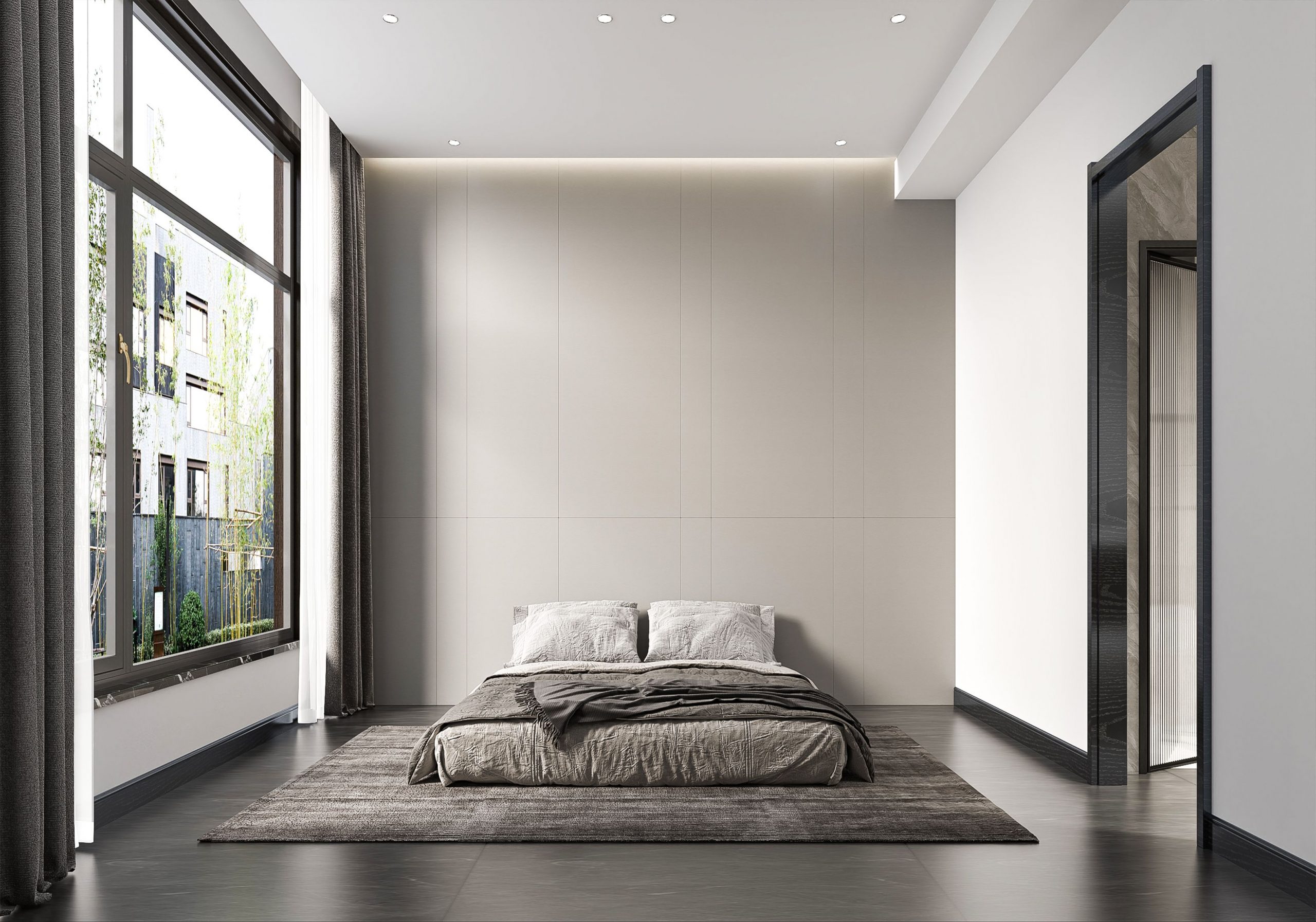
The bedroom is the room in which every human being begins and ends every day of their life — the most intimate, the most personal, and arguably the most important room in the entire home when the quality of sleep, the quality of rest, and the quality of the first and last conscious experiences of each day are considered as the genuine wellbeing factors that sleep science increasingly demonstrates them to be. It is also, for many people, the room that receives the least deliberate design attention — the space that accumulates the overflow from every other room, that houses the laundry that never quite makes it to the wardrobe, that hosts the exercise equipment whose intended daily use has settled into a weekly guilt trigger, and that communicates more clearly than any other room the difference between a domestic environment that has been genuinely designed and one that has simply been filled. Minimalist bedroom design offers the most directly and most immediately impactful transformation available to any bedroom whose current character is the result of accumulation rather than intention — the specific design philosophy whose application to the sleeping space creates the calm, the clarity, and the specific quality of unencumbered restfulness that sleep science consistently associates with the fastest sleep onset, the deepest sleep quality, and the most energised morning awakening. This guide covers the complete range of minimalist bedroom design ideas whose application to any bedroom — regardless of its size, its existing furniture, or its current level of visual complexity — produces the specific transformation from a room that is merely functional into one that is genuinely and memorably beautiful in the specific way that minimalism at its most accomplished always is: warm, personal, intentional, and as much about the specific quality of what has been chosen to remain as about the quantity of what has been thoughtfully removed.
The Minimalist Bedroom Philosophy: Calm, Clarity, and the Science of Better Sleep
The minimalist approach to bedroom design is not simply about owning fewer things or choosing a limited colour palette — it is about the deliberate creation of a sleep environment whose every element has been evaluated for its specific contribution to the quality of rest that the bedroom’s primary purpose demands. The research on bedroom environment and sleep quality provides a compelling scientific foundation for the minimalist design approach whose specific principles of reduced visual complexity, carefully managed light levels, temperature-appropriate textiles, and the deliberate exclusion of the work-associated, stress-associated, and stimulation-associated objects whose presence in the bedroom compromises the psychological transition from wakefulness to sleep have each been independently documented as contributors to the measurable sleep quality improvements that a well-designed sleep environment produces.
Visual complexity in the bedroom environment — the accumulated clutter of surfaces covered with objects, walls covered with images and decoration, and floors occupied by furniture and possessions whose combined visual stimulation prevents the nervous system’s transition to the lower arousal state that sleep onset requires — is among the most consistently identified environmental contributors to the difficulty of falling asleep in environments whose visual richness reflects genuine personal expression but whose stimulation is inappropriate for the specific neurological requirements of sleep preparation. The minimalist bedroom’s deliberate reduction of this visual complexity — not to the point of sterility but to the point where every visible object has been chosen for the specific quality of calm, beauty, or practical utility it contributes to the environment — creates the specific visual quietness that the brain most easily transitions from to the reduced consciousness of genuine sleep. Research from St Lawrence University in New York specifically identified bedroom clutter as associated with significantly worse sleep quality and the specific psychological experience of the bedroom as a stressful rather than a restful space — a finding whose practical implication for any person whose bedroom currently reflects the accumulation of life rather than the intention of design is both clear and immediately actionable.
The colour psychology of the minimalist bedroom — whose palette of soft neutrals, warm whites, and the gentle tonal variations of natural material surfaces creates the specific visual atmosphere of calm that both the aesthetic tradition of minimalist design and the research on colour and arousal most consistently endorse for the sleeping environment — provides the scientific and the aesthetic rationale for the colour choices whose consistent application across the walls, the bedding, and the visible furniture surfaces of the minimalist bedroom creates its characteristic quality of enveloping, peaceful calm. The specific neural mechanism through which muted, low-contrast colour environments promote the parasympathetic nervous system activity associated with rest and sleep — while high-contrast, saturated colour environments maintain the sympathetic arousal that wakefulness requires — gives the minimalist bedroom’s neutral palette not merely the aesthetic quality of sophisticated restraint but the genuinely functional quality of a sleep-optimised environmental stimulus whose daily contribution to the sleep health of the bedroom’s occupant accumulates into one of the most directly health-supporting design decisions available in the domestic interior.
The Bed: Making the Most Important Piece of Furniture Perfect
In a minimalist bedroom, the bed is not merely the room’s largest piece of furniture — it is the room’s primary visual and functional statement, the piece whose scale, whose quality, and whose specific design character determine more about the overall impression of the room than any other single element. The minimalist design philosophy’s reduction of the number of furniture pieces in the bedroom to the essential minimum elevates the visual importance of every remaining piece proportionally — making the quality and the intentionality of the bed selection the most consequential single design decision available in the minimalist bedroom, whose entire aesthetic character either soars or falls depending on the quality of the furniture that remains after the editing process has removed everything non-essential.
The bed frame selection for a minimalist bedroom should reflect the design principles of clean lines, honest materials, and the proportional relationship between the frame’s visual weight and the room’s dimensions whose correct assessment prevents both the underscaled frame that looks lost in a generous room and the overscaled frame that dominates a compact one in ways that destroy the sense of spacious calm that minimalist bedroom design most characteristically achieves. Low platform beds — whose proximity to the floor creates the specific visual effect of expanded ceiling height and reduced visual mass that makes compact rooms feel considerably larger than their dimensions might suggest — are the most consistently recommended bed format for minimalist bedroom design, combining the clean geometric simplicity of their unadorned silhouette with the practical quality of the low visual horizon that draws the eye horizontally across the room rather than concentrating it vertically on the bed’s mass. The material of the bed frame — the warm grain of solid oak or walnut, the cool precision of a powder-coated steel or aluminium frame, the soft organic texture of a linen-upholstered headboard — is the specific material expression of the minimalist bedroom’s overall material palette whose selection should reflect both the room’s natural light quality and the specific warmth or coolness of the overall design direction rather than any individually considered preference divorced from the room’s existing character.
Bedding in the minimalist bedroom deserves as much care in its selection as the frame itself — the quality of the linen, its specific white or neutral tone, and the specific texture of the fabric whose daily tactile contact with the sleeping body is as directly relevant to sleep quality as any other sensory dimension of the bedroom environment together determine the specific quality of the bed as both the visual centrepiece of the room and the functional heart of the sleep experience. High-quality cotton percale or linen bedding in white, ivory, or the softest grey-white tones — whose natural material breathability, whose weight, and whose specific surface texture each contribute to the thermal and tactile comfort that quality sleep requires — provides the bedding foundation that makes the minimalist bed not merely visually beautiful but genuinely exceptional as a sleeping surface whose comfort communicates the same quality of care and intentionality that the room’s design expresses in every other visible dimension.
Colour, Light, and the Atmosphere of Calm
The colour palette and the lighting design of the minimalist bedroom are the two atmospheric dimensions whose combined management produces the specific quality of enveloping, restful calm that distinguishes the genuinely excellent minimalist bedroom from the merely sparse one. Both elements work together to create the atmospheric character of the space — the colour palette establishing the visual temperature and the emotional register of the room’s basic character, the lighting modulating that character across the hours from the bright clarity of the morning rising light through the warm, softening quality of the evening preparation-for-sleep illumination that the most thoughtfully designed bedroom lighting schemes provide at each stage of the day’s transition.
The neutral palette most characteristic of accomplished minimalist bedrooms is not a single uniform tone but a carefully curated range of related neutrals whose specific combination creates the dimensional depth and the tonal interest that prevents the design from reading as flat or institutional. The warm off-white of freshly plastered walls provides a warmer, more enveloping base than brilliant white whose cooler undertone creates the sharper, harder atmosphere more appropriate to modern commercial than domestic residential interiors. The greyed linen tone of quality bedding adds the first layer of tonal variation. The warm oak or walnut grain of a bedside table or a minimal headboard introduces the natural material warmth that mineral and textile neutrals alone cannot provide with equal organic vitality. The specific grey-green or dusty sage of a single soft furnishing element — a throw, a cushion, or the pot of a simple plant — adds the colour touch whose restraint in a minimalist palette paradoxically makes it more visible and more satisfying than the same colour in a more crowded visual context would allow. This palette of carefully related neutrals with one restrained colour note is the specific colour composition whose mastery separates the minimalist bedroom that feels genuinely warm and genuinely inhabitable from the one that simply feels empty.
Lighting design in the minimalist bedroom requires the same layered approach that produces the most atmospherically versatile and most functionally complete lighting in any domestic interior — but whose application in the bedroom must be specifically calibrated to the room’s dual function as a space of activity in the waking hours and a space of deep rest during sleep, requiring the ability to transition between the brighter, cooler illumination that morning rising and before-bed reading require and the warmer, dimmer, more atmospheric illumination that prepares the brain for sleep most effectively. Wall-mounted reading lights at both sides of the bed — whose adjustable arm design allows the direction of the light precisely to the reading surface without illuminating the room broadly enough to maintain the wakefulness of a partner trying to sleep — provide the most practical and the most aesthetically integrated bedside lighting solution available, combining the functional reading light that the bed’s typical evening activity requires with the minimal surface footprint that avoids the cluttered bedside table that bedside lamps on any surface create. Dimmer switches installed on all bedroom circuit lighting provide the instrumental control of lighting level that transitions the room’s atmosphere from the functional clarity of the getting-ready morning to the warm, restful dimness of the pre-sleep evening whose specific illumination quality sleep specialists consistently identify as one of the most directly impactful environmental factors in the management of the sleep-wake cycle whose quality determines the depth and the restoration of every night’s sleep.
Storage and Decluttering: The Invisible Infrastructure of Visual Calm
The specific visual calm that minimalist bedroom design creates is not simply the product of choosing fewer and better objects — it is the product of having solved the storage problem sufficiently completely that the everyday objects whose presence in the bedroom is practically necessary are contained out of sight in ways that leave the visible surfaces clean, uncluttered, and available to contribute to the room’s atmospheric quality rather than undermining it with the visual noise of accumulated functional items. The storage infrastructure of the minimalist bedroom is therefore not a peripheral design consideration but the essential practical foundation whose adequacy or inadequacy most directly determines whether the minimalist design intention is realised in the daily lived experience of the room or remains an aspiration that the practical reality of everyday use progressively erodes.
Built-in wardrobes whose design integrates flush with the wall surface — the doors finished in the same paint colour or material as the surrounding walls so that their presence reads as a continuation of the wall rather than as the furniture addition that freestanding wardrobes inevitably communicate — are the most complete available solution to the clothing storage challenge that the minimalist bedroom must solve without the visual disruption of large, prominent freestanding furniture. The investment in quality built-in wardrobes — designed with the internal organisation systems of shelving, hanging rails, and drawer units whose specific configuration reflects the actual clothing and accessory storage requirements of the room’s occupant rather than the generic one-size-fits-all internal arrangements of standard wardrobe installations — is the bedroom design investment whose return in the sustained visual quality and the practical functionality of the room is most reliably and most continuously felt across the years of daily use that follows its completion. For bedrooms whose budget or rental status makes built-in wardrobes impractical, the most minimalist-compatible freestanding wardrobe alternative is the simplest, flattest-fronted, most wall-like option available — the plain-fronted wardrobe in a finish that reads as close to the wall colour as possible, positioned flush against the wall without the projecting cornice or plinth detail that creates the visual complexity the minimalist bedroom is specifically designed to eliminate.
The bedside table in a minimalist bedroom serves its function most effectively when its surface discipline is maintained — when the daily practice of keeping only the genuinely daily-use items on the surface is consistently applied and when the specific items that remain are selected for both their functional necessity and their contribution to the room’s aesthetic character. A single quality lamp or wall-mounted reading light, a single book, a glass of water, and perhaps a small plant whose living presence adds the organic note that the most accomplished minimalist interiors consistently include as a specific counterpoint to the human-made precision of everything around it — this specific, restrained, deliberately chosen surface composition is the bedside discipline whose daily maintenance is the most immediately visible expression of the home and garden minimalist philosophy applied to the most intimate and most restorative room in the entire domestic environment.
Texture, Natural Materials, and the Warmth That Makes Minimalism Liveable
The minimalist bedroom whose design has successfully avoided the coldness and the sterility that poor minimalism produces achieves its warmth through the deliberate and generous use of natural materials and tactile textures whose sensory richness provides the comfort and the character that the restrained colour palette and the reduced object count alone cannot supply. The warmth of a minimalist bedroom is textural rather than decorative — felt in the weight of quality linen bedding, the smooth grain of solid timber, the softness of a wool throw, the slight irregularity of a hand-thrown ceramic — and these material qualities provide a sensory depth that is simultaneously visually quiet and physically generous in the most perfectly balanced expression of what minimalist design at its most accomplished always aims to achieve.
Natural timber — in the warm, fine grain of oak, the richer, darker depth of walnut, or the lighter, more casual tone of ash and pine — is the most versatile and most universally applicable natural material warmth provider available in any minimalist bedroom, whose appearance in a bed frame, a bedside table, a floating shelf, or the warm floorboard that runs beneath every piece of furniture creates the specific quality of organic human connection that the absence of natural material in a minimalist interior most visibly and most immediately produces as a sense of coldness. The specific grain pattern, the gentle variation in tone across the wood’s surface, and the way that natural timber responds to light — catching it differently at different hours, revealing the texture of the grain under the low, raking light of early morning in a way that flat, painted surfaces never do — creates the living quality whose presence in a minimalist bedroom is as genuinely important to the room’s atmospheric warmth as any decorative addition whose presence would compromise the visual restraint that the minimalist philosophy requires.
Textiles provide the second most significant natural material warmth dimension in the minimalist bedroom — the weight and the drape of quality linen curtains whose movement in a gentle breeze adds the kinetic dimension that hard surfaces cannot provide, the softness and the pile depth of a wool or cotton rug underfoot whose textural warmth is felt both visually and physically, and the layering of bedding that creates the specific sensory luxury of the perfectly made minimalist bed whose visual simplicity conceals the physical generosity of quality materials whose daily tactile pleasure is among the most consistently described rewards of the minimalist bedroom approach by the people who live in them most happily and most sustainably. The home and garden interior whose bedroom achieves this specific balance of visual restraint and physical warmth — whose every visible surface and every tactile contact communicates the careful selection and the genuine quality of what has been chosen to remain in a space that has been honestly and lovingly edited to contain only what genuinely belongs — is the interior whose specific quality of beautiful, restful, inhabitable calm is the highest achievement available within the minimalist bedroom design tradition and the one that every person who has ever experienced it describes as one of the most genuinely transformative single room improvements available in the entire landscape of domestic interior design.
Conclusion
Minimalist bedroom design is not the renunciation of beauty or comfort in favour of austerity — it is the most considered and the most personally demanding expression of the belief that the specific quality of beauty available in a space that contains only what genuinely belongs is more satisfying, more restful, and more enduringly rewarding than the diffuse, visually busy quality of a space whose content reflects accumulation rather than intention. The clean-lined bed whose quality and proportions make it the room’s perfect centrepiece, the neutral palette whose carefully curated tonal relationships create warmth without complexity, the layered lighting whose management across the day’s hours creates the atmosphere whose quality supports both the wakefulness and the sleep that the bedroom serves in different moments, the invisible storage infrastructure whose completeness keeps practical necessities out of sight and surfaces clean, and the natural materials and textures whose sensory richness provides the specific physical warmth that balances the visual restraint of the minimalist palette — together these elements create the bedroom whose daily experience of returning to it is one of the most directly and most consistently pleasurable rewards of domestic design investment available in any room of any home. The bedroom that has been approached with this quality of intention is a room that serves its fundamental purpose of deep, restorative rest with a completeness and a consistency that the cluttered, unintentional bedroom cannot match — and whose specific quality of calm, of beauty, and of genuine, inhabitable warmth makes every night’s return to it one of the small but genuinely significant daily pleasures whose accumulation across the years of a well-designed life is one of the most rewarding aspects of living intentionally in a home that has been genuinely and thoughtfully made your own.